
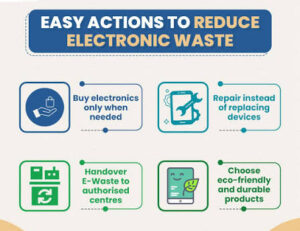
With 5.35 billion internet users globally and projected to rise to 7.9 billion by 2029, our world is getting more and more digital. The number of digital devices is growing along with the use of the internet, creating a global issue known as electronic waste, or e-waste. The fastest-growing waste stream is e-waste, which contains dangerous substances that could endanger the ecosystem. A startling quantity is thrown annually, frequently too soon. From laptops to smartphones, many of these gadgets may still have a worthwhile second life. Unfortunately, many potentially reusable devices wind up in landfills, where the hazardous elements they contain endanger the environment.
The good news? Adopting ethical techniques to manage and minimise e-waste, especially dangerous goods like batteries and cell phones, can make a big difference.
What Does “E-waste” Mean?
The term “electronic waste” (also known as “e-waste”) refers to a broad category of outdated, discarded, or end-of-life electrical and electronic equipment, including household appliances, office information and communications equipment, consumer and entertainment electronics, lighting equipment, electric and electronic tools, toys, and electrically powered leisure, sports, and recreational equipment. Both valuable and hazardous compounds are included in e-waste, necessitating unique handling and recycling techniques.
Why Is Reducing E-Waste Important?
As the fastest-growing home and commercial waste stream in the world, reducing electronic garbage, or “e-waste,” is essential. Any kind of electronic device that has a plug, cord, and/or battery is considered e-waste. Consider gadgets like hair dryers, TVs, laptops, cell phones, toys, and appliances. They should never be disposed of in a landfill since they contain precious elements. Every year, between 20 and 50 million metric tonnes of e-waste are disposed of. Regretfully, only 12.5% of it is recycled. 62 million metric tonnes of e-waste were created worldwide in 2022, almost twice as much as in 2010.Over 75% of e-waste is not correctly documented, demonstrating that waste management techniques are still inadequate despite this notable growth. Improved recycling and recovery technologies are desperately needed, since estimates show that e-waste production will exceed 80 million metric tonnes by 2030. The majority of gadgets, including cell phones, laptops, memory sticks, TVs, tablets, and batteries, wind up in landfills and pollute the air and water. These numbers can be raised by effective e-waste management, which guarantees that as much electrical waste from homes and businesses is recycled, repurposed, and minimised. The good news is that cutting back on your e-waste is simple.
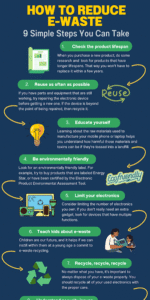
The Top 10 Strategies to Cut Down on E-Waste
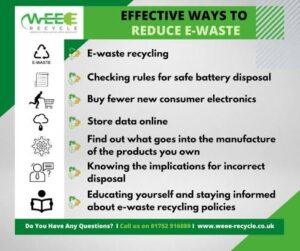
Waste Electrical and Electronic Equipment (WEEE) recycling: Electronics should never be disposed of with regular trash at home or at work. If you are unable to repair, reuse, or donate any home or business WEEE goods, always look for our recycling options. Go to the home waste recycling center (HWRC) in your area or locate an electrical retailer nearby that accepts recycled materials for domestic WEEE. Businesses need to set up WEEE commercial waste collection that guarantees recycling.
Donate outdated electronics: When replacing outdated laptops at work or purchasing new gaming consoles, cell phones, or other electronic devices, think about giving them away. Donate to a local cause, a charity store, or your loved ones.Even if your outdated electrical device isn’t functional, there might be individuals, companies, or nonprofits who are ready to accept it and fix it.
Check gadgets on a regular basis: To identify difficulties before they get worse, keep an eye out for any flaws or problems with any electrical devices you frequently use. In this manner, you can have them corrected before they worsen and become irreversible. Reducing needless e-waste is aided by preventative measures.
Include recycling in your daily routine: The amount of rubbish that ends up in landfills decreases as more people recycle. Fortunately, numerous states have enacted legislation limiting the kinds of waste that can be disposed of in public. Making recycling a priority in your daily life will help you stay out of trouble and encourage others to support sustainability.
Organise your gadgets: It’s understandable that we forget what we have in our home given the quantity of electronics we store in cabinets and drawers. Organise your current devices to determine whether they truly need to be replaced rather than purchasing new ones.
Educate people about e-waste: Spreading the knowledge you acquire about e-waste to those in your social circle is the most effective strategy to increase awareness of its negative effects on the environment. Many people have adopted sustainable practices like recycling as a result of awareness efforts.
Purchase Energy Star Rated equipment: Make use of environmentally friendly equipment that also use less electricity, which will lower your electricity costs. The next time you buy a refrigerator, air conditioner, microwave, or washing machine, choose one that reduces hazardous emissions from power plants.
Reduce: Reduce is the most crucial of the three R’s (Reduce, Reuse, Recycle). Buying a new laptop, a stylish TV, or the newest cell phone is quite simple. The majority of individuals never even consider whether they truly need them. Consider whether you truly need something before making a purchase.
Look for an environmental seal on the packaging: Choosing products with an eco-friendly seal on the packaging is another strategy to cut down on e-waste. Various environmental seals may be present on products manufactured from recyclable or recycled materials.
Before you purchase a product, find out how long it will last: Checking a product’s lifespan before purchasing it is one of the most obvious strategies to reduce e-waste. Steer clear of trendy electronics that quickly become outdated.
Concluding
Electronics that are still functional can be recycled to help the environment and give them a second chance at life. Your new needs are often greater than the capabilities of your old equipment, even when they are still fully functional. Consider reusing them rather than throwing them away or letting them collect dust in storage. At GreenPrithvi Recyclers, we think that electronics may be given new life by being sold or donated to others who would value them just as much as you did. To increase their usefulness and cut down on waste, you may also swap your devices in the market as used goods.
Recall that every action matters, and if we work together, we can reduce e-waste.
Partner with GreenPrithvi Recyclers today to dispose of your e-waste the right way—and contribute to a healthier planet.